Frozen shoulder and Stiff shoulder · with Jo Gibson

Diagnose and treat frozen and stiff shoulders with confidence

Two complete video series with Jo Gibson of the Liverpool Upper Limb Unit: how to identify frozen shoulder early, assess it accurately and treat it effectively, and how to differentiate and treat frozen shoulder, osteoarthritis, rotator cuff arthropathy, avascular necrosis and the other causes of a stiff, painful shoulder.

videos with Jo Gibson
6videos with Jo Gibson
hours of CPD
3.5hours of CPD
months access
12months access

Diagnosis and appropriate management in the early stages of frozen shoulder is crucial to your patient's outcome. Identify it early, explain it confidently and start your patient on the road to recovery before their pain gets worse.

The curriculum

Two video series, six videos, one clear approach to frozen and stiff shoulders

Module 1 takes you through frozen shoulder causes and diagnosis, assessment and treatment. Module 2 covers the stiff shoulder: the risks and culprits, how to assess and diagnose it, and how to treat it. A transcript, a handout, MP3 audio and a bonus set of seven frozen shoulder infographics are included.

Module 01
Jo Gibson· 1h 25m

Frozen shoulder

Identify frozen shoulder early, assess it accurately and treat it effectively.

Three videos with Jo Gibson on frozen shoulder causes and diagnosis, assessment and treatment, so you can identify patients with a likely frozen shoulder from their history, confirm it with your assessment and choose the most effective, evidence-based treatment.

Frozen shoulder is difficult to diagnose accurately in the early stages, when your patient may have horrible pain but still have decent range of movement with minimal stiffness. Jo takes you through how to make an early diagnosis, help your patient understand their pain and recovery, and choose treatment that helps settle their pain.

In this module you'll discover
  • Why frozen shoulder is difficult to diagnose accurately in the early stages, and how you can more easily identify it.
  • Which frozen shoulder myth is commonly believed by therapists, even though it slows patient recovery.
  • How to confidently explain frozen shoulder to your patients.
  • Why patients with obesity, cardiovascular disease, diabetes or thyroid issues are more likely to develop frozen shoulder.
  • Why frozen shoulder is commonly missed and misdiagnosed, and the questions you need to ask in your subjective examination.
  • Whether early strengthening, stretches or injections improve pain and recovery, or make things worse.

By the end of this module you'll be able to identify a likely frozen shoulder from the patient history, confirm it with your assessment and start the right treatment early.

3 presentations
Slide to browse
  • 1. Frozen shoulder causes & diagnosis
  • 2. Frozen shoulder assessment
  • 3. Frozen shoulder treatment
Module 02
Jo Gibson· 2h 2m

Stiff shoulder

Frozen shoulder, osteoarthritis, rotator cuff arthropathy, avascular necrosis or something else: find out which, and how to treat it.

How to assess, diagnose and treat the common causes of a stiff, painful shoulder, including frozen shoulder, osteoarthritis, rotator cuff arthropathy, avascular necrosis and other common causes, in three videos with Jo Gibson.

When your patient has a stiff and painful shoulder, how can you identify whether it is frozen shoulder, osteoarthritis, rotator cuff arthropathy, avascular necrosis or another cause? Your patient's muscle system has a hard time doing its job in the presence of stiffness. Do we plug away at the exercises, stretch or mobilise their shoulder, wait for it to thaw, get an injection or something else?

In this module you'll discover
  • How to identify the likely diagnosis from your patient's history, the causes of a stiff shoulder, and which patients are likely to have frozen shoulder, osteoarthritis, avascular necrosis, posterior dislocation or a red flag.
  • The questions you need to ask in your subjective examination to guide your assessment and diagnosis.
  • How to perform an objective assessment that confirms your diagnosis and directs your treatment, with practical demonstrations.
  • How to target your treatment and improve your results with stiff shoulder patients.
  • Whether your treatment of frozen shoulder, osteoarthritis, avascular necrosis and other stiff shoulder patients should include strengthening, lengthening, mobilisation, immobilisation or injection.

By the end of this module you'll be able to differentiate the common causes of a stiff, painful shoulder and choose treatment that suits the diagnosis.

3 presentations
Slide to browse
  • 1. Stiff shoulder risks and culprits
  • 2. How to assess & diagnose stiff shoulders
  • 3. How to treat patients with a stiff shoulder
Resources & bonuses Included with every ticket
Frozen shoulder infographics

Frozen shoulder infographics

Seven exclusive infographics on frozen shoulder assessment, diagnosis and treatment, in a single PDF you can download from your dashboard.

What changes in clinic

From missed diagnoses to a clear plan for frozen and stiff shoulders.

With the Frozen shoulder and Stiff shoulder video series, Jo Gibson will show you how to:

  • Use your patient history and subjective examination to identify patients with a likely frozen shoulder, even in the early stages when they still have decent range of movement.
  • Accurately assess frozen shoulder patients and confirm your diagnosis with a focused objective examination.
  • Explain frozen shoulder confidently to your patients, including why patients with diabetes, thyroid issues, cardiovascular disease or obesity are more likely to develop it.
  • Choose the most effective, evidence-based treatment for early stage frozen shoulder, and know whether early strengthening, stretches or injections help or make things worse.
  • Identify whether a stiff, painful shoulder is frozen shoulder, osteoarthritis, rotator cuff arthropathy, avascular necrosis, posterior dislocation or a red flag.
  • Target your treatment of stiff shoulders, and decide between strengthening, lengthening, mobilisation, immobilisation or injection.
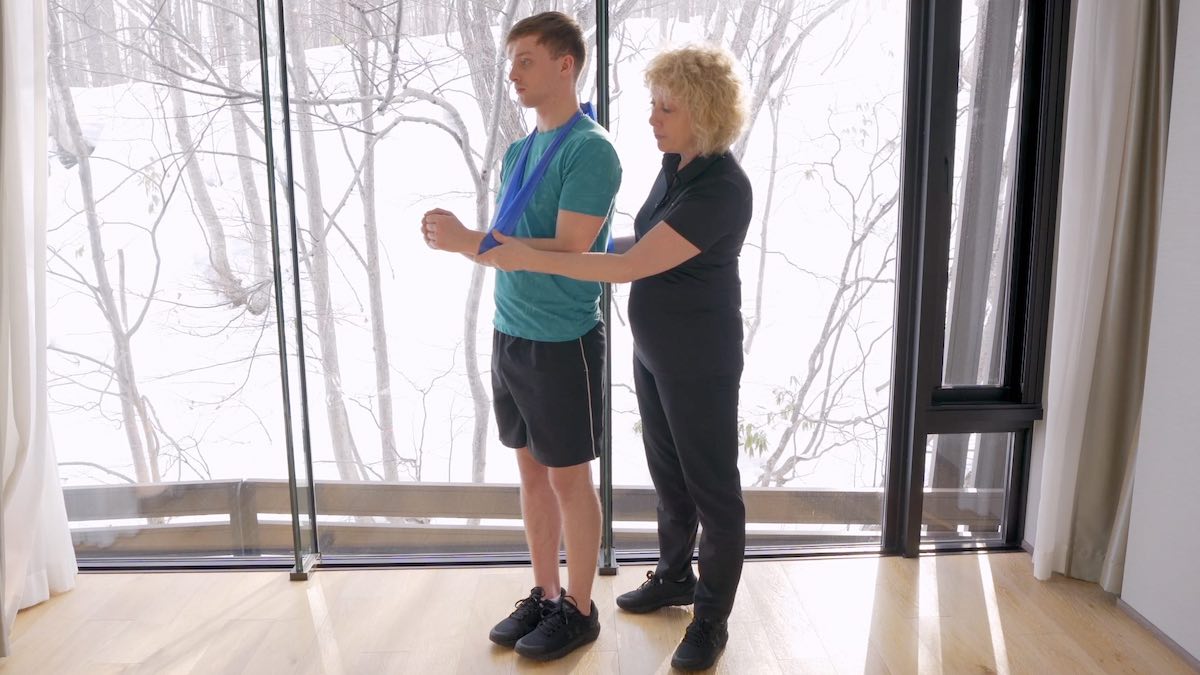
Jo Gibson assessing a patient's shoulder in the clinic

Feedback and testimonials from therapists who completed the course, in their own words.

Real reviews from physiotherapists, physical therapists, chiropractors and podiatrists around the world.

  • These videos have been amazing. I've just moved from Ortho to MSK as a First Contact Practitioner and have just spoken to a lady with a frozen shoulder that I am super confident with diagnosing due to these videos.
    Amy TildesleyPhysio and First Contact Practitioner · UK

Read feedback from people who’ve attended the Frozen shoulder and Stiff shoulder online course.

Evidence-informed

Practical, current CPD you can use with your next shoulder patient

Jo Gibson takes you through the latest evidence on frozen shoulder and stiff shoulders, with practical assessment demonstrations and treatment options you can apply in your next clinic session. A transcript, a handout, audio downloads and a set of infographics come with the videos.

2
Video series: Frozen shoulder and Stiff shoulder
6
Videos with Jo Gibson, about three and a half hours in total
12
Months of unrestricted access, on any device
Certificate
For your CPD records on completion
  • Frozen shoulder video transcript
  • Stiff shoulder handout
  • Downloadable MP3 audio
  • Seven frozen shoulder infographics
  • Certificate for your CPD records
  • 90 day satisfaction guarantee
Enrol

One ticket. Both video series. 12 months access.

A single 12 month ticket gives you immediate access to the Frozen shoulder and Stiff shoulder video series, the transcript, handout, audio downloads, infographics and your certificate. Prices in Australian dollars.

12 months access
39AUD
One upfront payment
Payment options for 12 months access
  • 12 months unrestricted access to the Frozen shoulder video series with Jo Gibson
  • Three videos taking you through exactly how to assess, diagnose and treat frozen shoulder
  • 12 months unrestricted access to the Stiff shoulder video series with Jo Gibson
  • Watch the videos as many times as you like, on any device
  • Certificate on completion for your CPD/CME records
  • 100% satisfaction guarantee. Love it or receive a full refund and keep your access
Immediate access to both video series as soon as you register. Secure checkout with Stripe.
VISA
stripe
256-bit SSL
The security of your purchase is ensured by an SSL certificate and a fully secure Stripe payment portal. All membership, conference and course prices listed are in Australian Dollars (AUD). 90 day satisfaction guarantee. If you don't love the videos, let us know within 90 days of registering for a full refund, and keep your access for the full 12 months.
Your presenter

Jo Gibson, Clinical Physiotherapy Specialist at the Liverpool Upper Limb Unit

Jo Gibson has specialised in rehabilitation of the shoulder since 1995 and works at the Liverpool Upper Limb Unit and in private practice.

Jo Gibson
Jo Gibson
Clinical Physiotherapy Specialist · Liverpool Upper Limb Unit
Since 1995
Specialising in the shoulder

Jo Gibson MCSP MSc is a Clinical Physiotherapy Specialist who has specialised in rehabilitation of the shoulder since 1995 and works at the Liverpool Upper Limb Unit and in private practice. She is a consultant to several elite sports teams regarding shoulder rehabilitation.

Jo is an Associate Lecturer at Liverpool University, has published in peer-reviewed journals, has written several book chapters and co-authored national guidelines for the treatment of common shoulder pathologies. She is Co-Editor of the Educational Section of the Journal of Shoulder and Elbow.

Jo's research interests include communication, complex instability and accelerated rehabilitation. She teaches all over the world and is passionate about empowering clinicians and helping translate the evidence base into meaningful practice that optimises management of patients with shoulder pain.

Jo Gibson
Clinical Physiotherapy Specialist · Liverpool Upper Limb Unit
CPD

About three and a half hours of CPD, with a certificate on completion

The Frozen shoulder and Stiff shoulder video series contain six videos totalling about three and a half hours of CPD. The videos and resources you view are logged in an automatic CPD record you can print and save as evidence for your professional registration and insurance, and a certificate for your CPD/CME records is generated automatically within 24 hours of completing 85% of the course.

3.5
Hours of CPD across six videos
85%
Completion earns your certificate
Auto
CPD record kept for you in your dashboard
Who can enrol

Anyone with a Health Science degree. The education contained on the site has a certain level of expected knowledge, so you must be a Physiotherapist, Physical Therapist, Osteopath, Chiropractor, Sports Doctor, Exercise Sports Scientist or trained health professional. Massage therapists and remedial therapists are unable to become members or join the course.

FAQ

Common questions.

Questions about the course

Course enrolment

Payment and Technical Questions

Clinical Edge Members Information

Be confident with your next frozen shoulder or stiff shoulder patient.

Register for immediate access to both video series and incorporate the latest evidence into your assessment and treatment of frozen shoulder and stiff shoulders.

Immediate access · 12 months · 39 AUD · 90 day guarantee
Jo Gibson and David Pope